
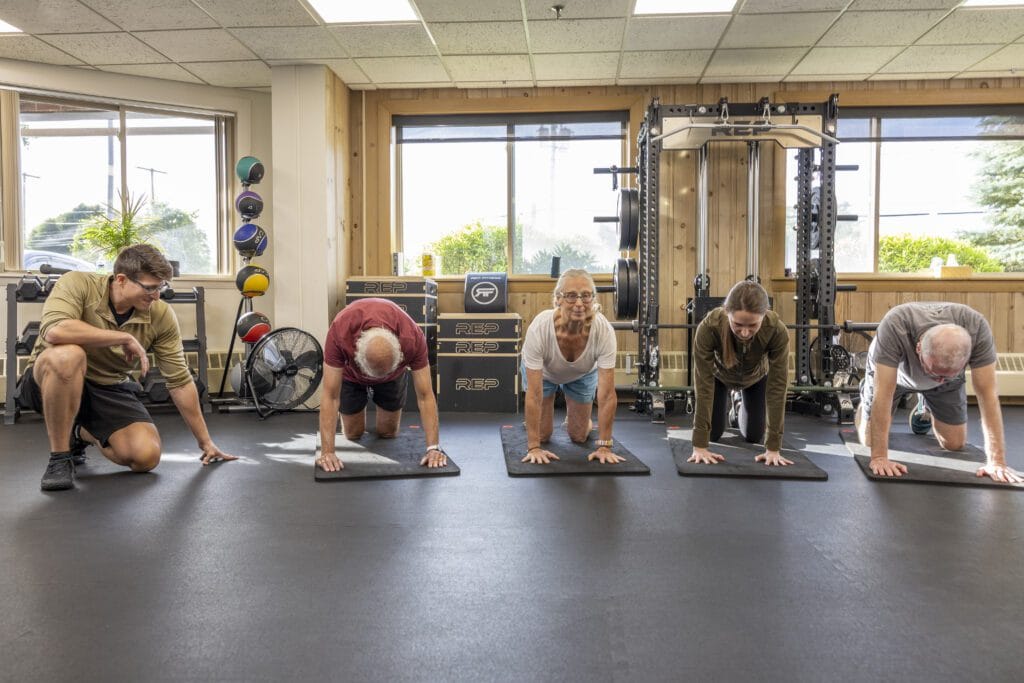
Knee pain is the most common reason people stop training legs, and stopping is usually the worst thing they could do. Muscle supports the joint. Take the muscle away and the joint has less help, not more.
This is not medical advice, and if you have a diagnosed structural issue, follow your provider’s guidance. But for the majority of everyday knee complaints, there is a middle path between “push through it” and “never squat again.”
First, figure out which knee pain you have
Broadly:
- Pain in front of the kneecap, worse with stairs and deep knee bend. Usually load and tracking related, and very trainable.
- Pain on the inside or outside, often related to volume changes or hip control.
- Sharp pain, swelling, locking, or giving way. Get this assessed before training through it.
What you can usually keep doing
Hip dominant work
Romanian deadlifts, hip thrusts, and back extensions load the posterior chain with almost no knee bend. Most knees tolerate these immediately, and they build the muscle that supports the joint.
Short range, slow tempo
If deep squats hurt, squat to a box at a height that does not. Slow the descent to three seconds. Reduced range plus more time under tension is still a strong stimulus.
Isometrics
Wall sits and split squat holds at pain-free angles are one of the most reliable ways to calm a sore knee down. Twenty to forty-five seconds, a few times a day, low effort.
Single leg work at tolerated range
Step ups to a low box, split squats with a short range, and lateral band walks build control without demanding full depth.
What to modify rather than remove
- Deep squats become box squats or goblet squats to a comfortable depth.
- Lunges become reverse lunges or step ups.
- Leg extensions become shorter range, slower tempo, lighter load.
- Running becomes incline walking or cycling for a few weeks.
How to progress back
The rule we use is simple: if pain stays at or below a three out of ten during the session and settles within twenty-four hours, the load was appropriate. If it spikes and lingers, reduce range or load next time. Progress by adding range first, then load, then volume.
What usually makes it worse
- Complete rest for weeks, which deconditions the muscle around the joint.
- Sudden jumps in running volume.
- Ignoring hip and ankle range, which changes how the knee tracks.
- Training through sharp pain because a program said so.
Our mobility training work covers the ankle and hip ranges that take pressure off the knee, and it is built into sessions for anyone with a history of knee trouble.
Get it looked at properly
Training Around Knee Pain: The Rules We Use
Keep the pain at or below three out of ten during the set, and make sure it settles within twenty-four hours. If it does, you can keep training around knee pain while you rebuild capacity.
If it spikes and lingers, reduce range before you reduce load. Progress by adding range first, then weight, then volume.
If you want to understand how coaches are trained to load joints, the NASM OPT model is a good read.
One more habit that helps: keep a simple note of what you did and how the knee responded the next morning. Patterns show up fast, usually around volume rather than exercise choice. Two good weeks followed by a spike in a single session is the most common story, and the fix is almost always a smaller jump rather than a different exercise.
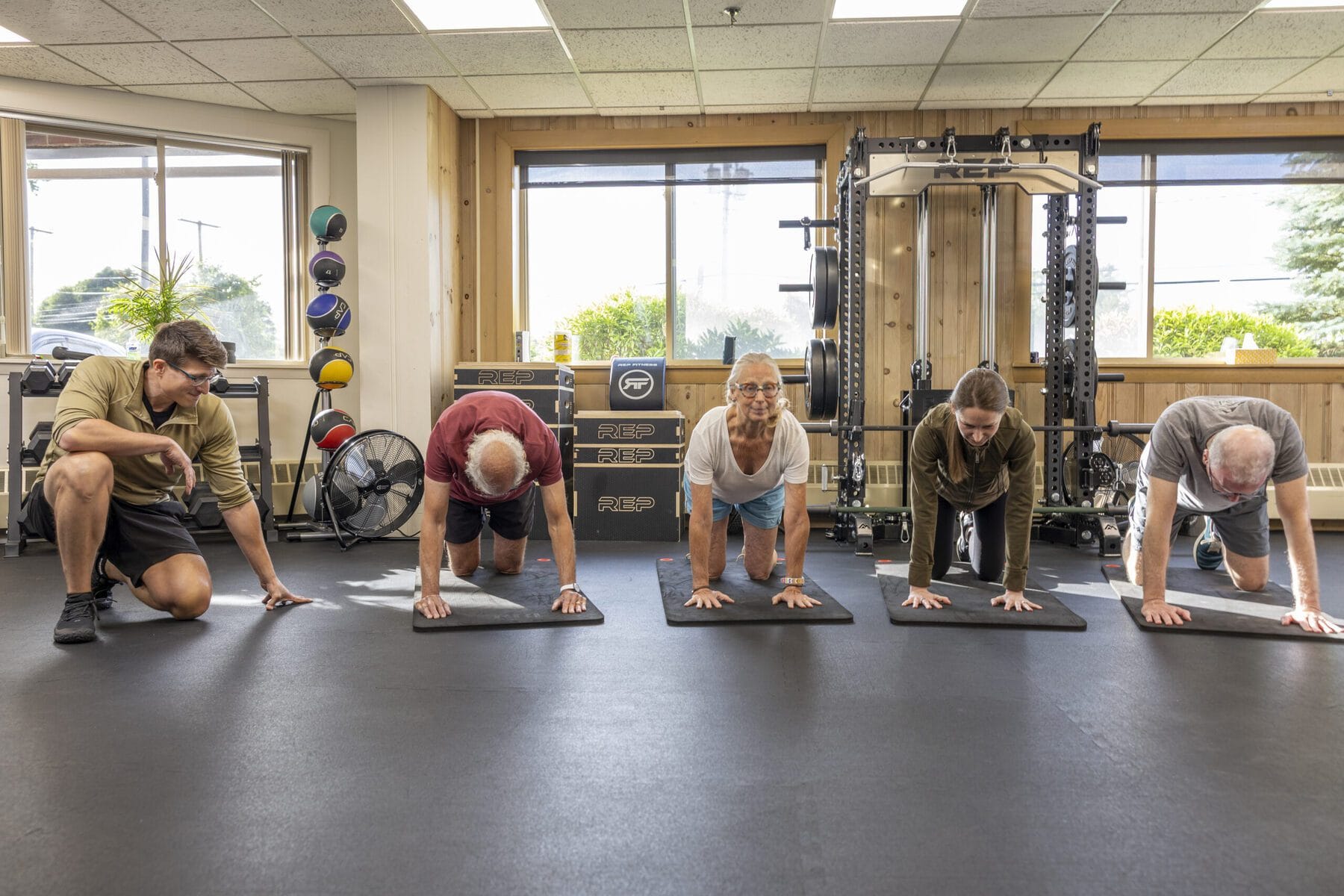
Training around knee pain in practice
Most people who look into training around knee pain want the same three answers: cost, frequency, and how fast results show up. All three get answered before you commit to anything with training around knee pain. Start with training around knee pain and you get a movement screen, a written plan, and coaching on every rep.
Nothing about training around knee pain is guesswork. There is no contract to sign before you try training around knee pain. With training around knee pain, the plan for the days you train alone is written down.
A movement screen will tell you more in fifteen minutes than a month of guessing. If you are in Concord or the surrounding towns and want to train around a knee that has been limiting you, book a free consultation. We will find what you can do first, then build from there.